SerpAPI Review: Features, Pricing, Search APIs, and the Best 5 Alternatives

Introduction To SerpAPI
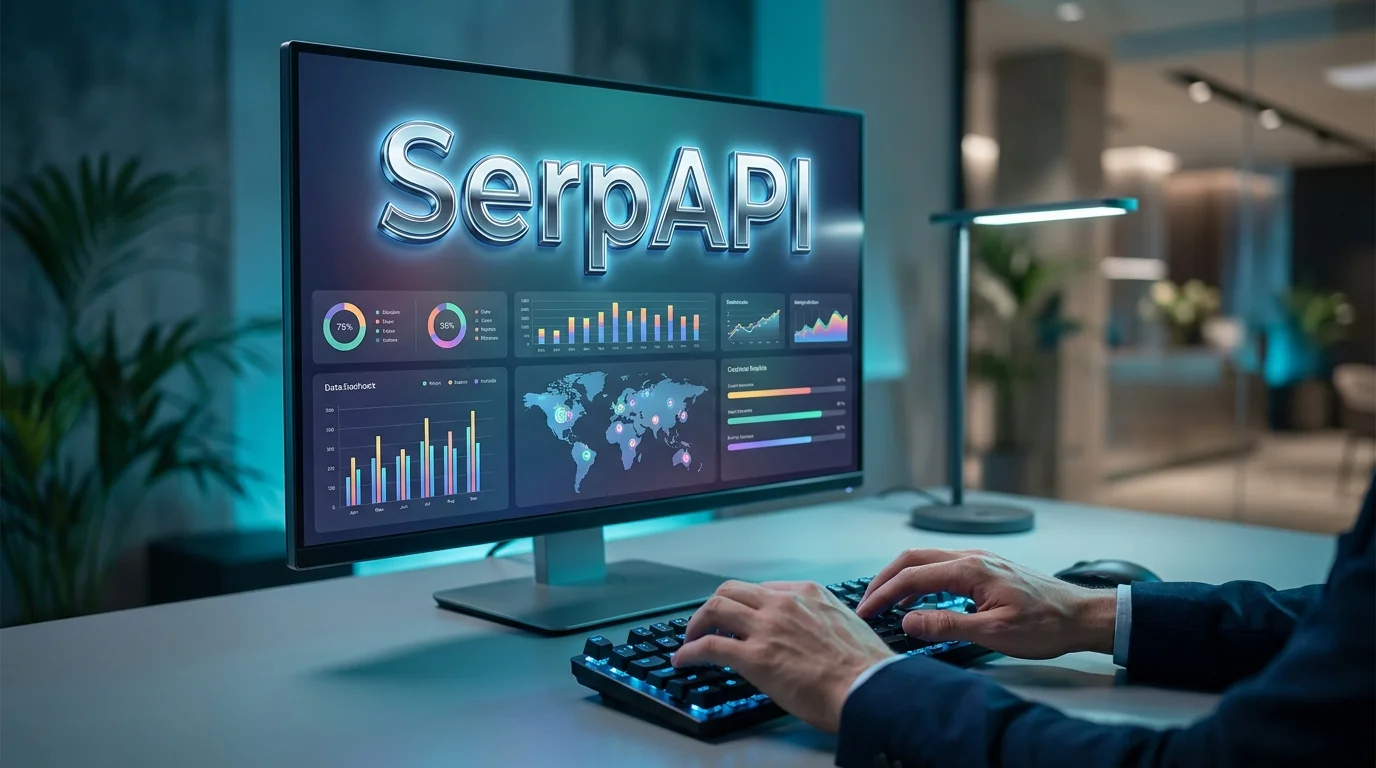
If you’ve ever tried to extract Google search results at scale — for SEO research, competitive intelligence, or data pipelines — you’ve almost certainly stumbled upon SerpAPI. It’s one of the most widely discussed search result APIs on the market, and for good reason.
But is it actually worth it? After personally integrating SerpAPI into several data projects — from rank tracking dashboards to lead generation workflows — I can tell you the honest truth: it’s powerful, but it’s not perfect for everyone.
In this complete guide, you’ll find:
- What SerpAPI is and how it actually works
- A deep-dive into its features and search API coverage
- A transparent breakdown of pricing (including hidden limitations)
- Honest pros and cons based on real usage
- A side-by-side comparison of the 5 best SerpAPI alternatives in 2026
- A FAQ section to answer your most pressing questions
Whether you’re a developer, data analyst, or SEO professional, this guide will help you decide if SerpAPI is the right tool — or if you should be looking elsewhere.
What Is SerpAPI? A Quick Overview
SerpAPI (officially at serpapi.com{:target=”_blank” rel=”nofollow”}) is a real-time API service that lets developers retrieve structured search engine results pages (SERPs) without dealing with the complexities of web scraping — no proxy management, no CAPTCHA solving, no browser automation headaches.
Founded in 2017 and headquartered in Austin, Texas, SerpAPI has grown into one of the most recognized tools in the search data ecosystem. As of 2026, it serves tens of thousands of users globally, from solo developers to enterprise-level data teams.
💡 In plain English: SerpAPI acts as a middleman between your application and search engines like Google, Bing, or YouTube. You send a query; SerpAPI returns clean, structured JSON data — no scraping required on your end.
The key value proposition? You get real-time, structured SERP data without having to build and maintain a complex scraping infrastructure yourself.
How Does SerpAPI Work?
The workflow is refreshingly straightforward:
- Sign up and get your API key
- Send an HTTP request to the SerpAPI endpoint with your search parameters
- Receive structured JSON containing organic results, ads, featured snippets, knowledge panels, and more
- Parse and use the data in your app, dashboard, or pipeline
SerpAPI handles everything behind the scenes — rotating proxies, rendering JavaScript, solving CAPTCHAs, and parsing raw HTML into clean JSON.
Here’s a simple example of what a request looks like:
GET https://serpapi.com/search.json?q=best+SEO+tools&engine=google&api_key=YOUR_KEYThe response returns a fully structured JSON object with dozens of data points per result.
SerpAPI Key Features
1. Multi-Engine Search API Support
One of SerpAPI’s strongest selling points is its breadth of supported search engines. In 2026, SerpAPI covers:
| Search Engine | API Available | Notes |
|---|---|---|
| Google Search | ✅ Yes | Core product, most robust |
| Google Images | ✅ Yes | Full image results |
| Google Maps | ✅ Yes | Local business data |
| Google Shopping | ✅ Yes | Product listings & prices |
| Google News | ✅ Yes | News articles in real-time |
| Google Jobs | ✅ Yes | Job listings aggregation |
| Bing Search | ✅ Yes | Full organic results |
| YouTube | ✅ Yes | Video results & metadata |
| Amazon | ✅ Yes | Product search results |
| Walmart | ✅ Yes | E-commerce data |
| DuckDuckGo | ✅ Yes | Privacy-focused search |
| Baidu | ✅ Yes | Chinese search engine |
| Yahoo | ✅ Yes | Full results support |
| Naver | ✅ Yes | Korean search engine |
This multi-engine support makes SerpAPI genuinely versatile for international SEO and e-commerce price monitoring projects.
2. Google SERP Data Richness
The Google Search API is where SerpAPI truly shines. A single API call can return:
- ✅ Organic results (title, URL, snippet, position)
- ✅ Paid ads (Google Ads, shopping ads)
- ✅ Featured snippets (answer boxes)
- ✅ People Also Ask (PAA) questions
- ✅ Knowledge Graph data
- ✅ Local Pack results (map-based)
- ✅ Related searches
- ✅ Sitelinks
- ✅ Image carousels
- ✅ Video results
This level of granularity is something you simply can’t get from most competitors without heavy custom work.
3. Real-Time Results
SerpAPI prides itself on delivering live, real-time search results — not cached data. This is crucial for use cases like:
- Daily rank tracking
- News monitoring
- Price comparison engines
- Competitive intelligence dashboards
Unlike some alternatives that serve cached results to reduce server load, SerpAPI hits the actual search engine every time (unless you opt into their caching option for savings).
4. Google Trends API
SerpAPI also offers a Google Trends API, allowing you to pull trending topics, interest over time, and regional interest data — something most competitors don’t provide out of the box.
5. Batch Search & Async API
For high-volume users, SerpAPI offers:
- Async API: Submit searches and retrieve results later, preventing timeouts
- Batch processing: Send multiple queries in one request structure
- Search archive: Access up to 1 hour of cached results for repeat queries
6. SerpAPI Playground
The interactive API Playground on their website is one of the most beginner-friendly features I’ve encountered. You can test any query, adjust parameters, and preview the full JSON response before writing a single line of code.
💡 Pro Tip: Always use the Playground to validate your query structure before integrating it into production. It saves hours of debugging and helps you understand exactly what fields are returned for your specific use case.
7. Client Libraries & SDKs
SerpAPI provides official client libraries for:
- Python (most popular)
- Ruby
- Node.js / JavaScript
- Java
- Go
- PHP
- Rust
This broad SDK support means integration is relatively painless regardless of your tech stack.
SerpAPI Pricing Plans (2026)
Pricing is where things get more nuanced. SerpAPI uses a credit-based model, where each API call consumes one credit (search).
Here’s the current pricing structure as of 2026:
| Plan | Monthly Price | Searches/Month | Price per 1K Searches | Overage |
|---|---|---|---|---|
| Free | $0 | 100 | N/A | No |
| Developer | $50 | 5,000 | $10.00 | $10/1K |
| Production | $130 | 15,000 | $8.67 | $8.67/1K |
| Business | $250 | 30,000 | $8.33 | $8.33/1K |
| Enterprise | Custom | Custom | Negotiable | Negotiable |
⚠️ Important Note: Prices above are based on publicly available information. Always verify current pricing directly on serpapi.com/pricing{:target=”_blank” rel=”nofollow”} as plans can change.
What’s Included in All Plans?
- Real-time results
- Access to all supported search engines
- Full JSON output
- API Playground access
- Basic support
Billing Gotchas to Know
After working with SerpAPI across multiple projects, here are the real-world pricing considerations that the pricing page doesn’t always make obvious:
- Each search engine call counts separately. Querying Google Maps AND Google Search for the same keyword = 2 credits
- Cached results (returned within 1 hour of a previous identical query) are free — a useful saving for monitoring workflows
- Failed requests (errors on their end) are typically not charged, but always verify
- The free plan (100 searches/month) is great for testing, but it’s almost too limited for real development
SerpAPI Pros and Cons
✅ Advantages
- Genuinely comprehensive SERP data — probably the most feature-rich JSON output in the market
- Reliable uptime and speed — consistently fast response times in my experience
- Excellent documentation — one of the best-documented APIs I’ve used
- Wide SDK support — integration is smooth across all major languages
- Google Trends API included — rare among competitors
- Active development — new engines and features added regularly
- Transparent JSON structure — easy to parse and integrate
❌ Disadvantages
- Pricing is expensive at scale — $50/month for just 5,000 searches adds up quickly for data-heavy projects
- No monthly rollover — unused searches expire each billing cycle
- Limited historical data — primarily real-time; no deep historical SERP archive
- Rate limits can be frustrating on lower plans during traffic spikes
- Support response times can be slow on non-enterprise plans
- Geo-targeting complexity — precise local result targeting requires careful parameter tuning
SerpAPI User Ratings
Based on verified user reviews collected from G2, Trustpilot, and Product Hunt as of 2026:
| Criteria | Rating |
|---|---|
| ⭐ Ease of Use | ⭐⭐⭐⭐⭐ (4.6/5) |
| ⭐ Documentation Quality | ⭐⭐⭐⭐⭐ (4.8/5) |
| ⭐ Data Accuracy | ⭐⭐⭐⭐ (4.3/5) |
| ⭐ Value for Money | ⭐⭐⭐ (3.4/5) |
| ⭐ Customer Support | ⭐⭐⭐ (3.6/5) |
| ⭐ Overall Satisfaction | ⭐⭐⭐⭐ (4.1/5) |
“SerpAPI is hands-down the easiest way to get structured Google data into our pipeline. The docs are excellent. The only pain point is cost at scale.” — Verified G2 Review, 2025
The 5 Best SerpAPI Alternatives in 2026
SerpAPI is excellent, but it’s not always the right fit — especially when budget is a constraint. Here are the five strongest alternatives, each with a distinct advantage.
1. ScaleSerp

ScaleSerp is a search engine results page (SERP) API designed to help developers access structured search results programmatically. Instead of scraping search engines manually, businesses and developers can use its API to retrieve search results, images, news, shopping information, and other search data in a machine-readable format. ScaleSerp is particularly useful for SEO platforms, rank-tracking tools, competitive research, data analysis, and applications that require automated access to search engine results. With its API-based approach, ScaleSerp simplifies the process of collecting and integrating search data into custom applications and automated workflows.
Best for: Budget-conscious developers who need Google data
ScaleSerp{:target=”_blank” rel=”nofollow”} is the most direct SerpAPI competitor in terms of features, but it comes in at a significantly lower price point.
Key Features:
- Google, Bing, YouTube, and more
- Real-time results
- Batch search support
- Cloud-based result storage
Pricing: Starting from ~$25/month for 50,000 searches — dramatically cheaper than SerpAPI for comparable volume.
| Feature | SerpAPI | ScaleSerp |
|---|---|---|
| Google Support | ✅ | ✅ |
| Google Trends API | ✅ | ❌ |
| Price (5K searches) | $50/mo | ~$5/mo |
| Documentation | Excellent | Good |
| SDKs | 7+ languages | Limited |
⭐ Overall Rating: 4.2/5
2. Bright Data SERP API (formerly Luminati)
Bright Data SERP API is a web data extraction solution that enables developers and businesses to collect structured search engine results at scale. It provides programmatic access to SERP data, including organic results, paid advertisements, local listings, and other search-related information, depending on the search engine and configuration. The API is useful for SEO rank tracking, keyword research, competitor analysis, market research, and data-driven applications that require large volumes of search results. By handling much of the infrastructure involved in retrieving SERP data, Bright Data helps developers integrate search intelligence into automated tools and workflows.
Best for: Enterprise users needing maximum reliability and geo-precision
Bright Data{:target=”_blank” rel=”nofollow”} is the 800-pound gorilla of the web data industry. Their SERP API is built on top of one of the world’s largest proxy networks (72+ million IPs), making it unmatched for geo-targeted searches at scale.
Key Features:
- Hyper-precise geo-targeting (city-level)
- Google, Bing, Yandex, Baidu
- Structured JSON or raw HTML
- SERP monitoring tools
- 99.9% uptime SLA for enterprise
Pricing: Pay-as-you-go model — typically around $3–5 per 1,000 results depending on volume. Minimum spend required for some plans.
Best for: Large enterprises running price intelligence, brand monitoring, or localized SEO audits across dozens of countries.
⭐ Overall Rating: 4.5/5
3. Oxylabs SERP Scraper API
Oxylabs SERP Scraper API is a web scraping solution that enables businesses and developers to collect search engine results programmatically and at scale. It can retrieve structured SERP data from major search engines, making it useful for SEO monitoring, keyword tracking, competitor research, market analysis, and data-driven applications. The API handles much of the technical infrastructure required for large-scale SERP data collection, allowing developers to integrate search results into their own platforms and automated workflows. With support for scalable data collection and structured output, Oxylabs SERP Scraper API provides a practical solution for organizations that need reliable search engine data for analysis and automation.
Best for: High-volume enterprise data teams
Oxylabs{:target=”_blank” rel=”nofollow”} is another enterprise-grade player with a strong SERP scraping API that emphasizes data quality and success rate guarantees.
Key Features:
- 98%+ success rate guarantee
- 100+ million residential proxies
- Real-time & scheduled scraping
- Google Ads data included
- Dedicated account managers
Pricing: Starts at approximately $49/month for smaller volumes, but the true value is at enterprise scale.
⭐ Overall Rating: 4.3/5
4. DataForSEO API
DataForSEO API is a suite of APIs designed to provide structured SEO and search engine data for developers, agencies, and businesses. It offers access to SERP results, keyword data, rankings, backlinks, competitor insights, and other SEO-related information that can be integrated into custom applications and analytics platforms. DataForSEO is particularly useful for building rank-tracking tools, SEO dashboards, keyword research platforms, and automated reporting systems. With programmatic access to large volumes of search and SEO data, the platform helps developers create scalable solutions for monitoring search performance and conducting competitive analysis.
Best for: SEO agencies and professionals needing bulk data affordably
DataForSEO{:target=”_blank” rel=”nofollow”} takes a different approach — it’s an entire SEO data platform, not just a SERP API. Beyond search results, you can pull keyword data, backlink data, on-page metrics, and more.
Key Features:
- SERP data for 60+ countries
- Keyword difficulty, search volume, CPC data
- Backlink index
- Real-time and sandbox (free) environment
- Pay-per-use pricing — no monthly commitment
Pricing: One of the most affordable options — as low as $0.001 per SERP task. A serious consideration for high-volume SEO work.
Why it stands out: DataForSEO is the only alternative here that bundles keyword research data WITH SERP results — making it a potential replacement for both SerpAPI AND a separate keyword tool.
⭐ Overall Rating: 4.4/5
5. Zenserp
Zenserp is a SERP API that enables developers and businesses to retrieve structured search engine results programmatically. It provides access to data such as organic search results, paid advertisements, featured snippets, local listings, and other SERP elements, depending on the search engine and query. Zenserp is useful for SEO rank tracking, keyword research, competitor analysis, market research, and applications that need automated search data. By providing search results in an easy-to-process format, Zenserp simplifies the integration of SERP data into custom tools, dashboards, and automated workflows.
Best for: Startups and small teams needing a simple, affordable Google API
Zenserp{:target=”_blank” rel=”nofollow”} is a lightweight, no-frills Google Search API that prioritizes simplicity and price. It doesn’t have the depth of SerpAPI’s feature set, but for basic rank tracking or content research, it gets the job done.
Key Features:
- Real-time Google results
- Image, news, shopping, and places support
- Simple REST API
- Image SERP support
Pricing: Free tier (50 searches/month), paid plans from $29/month for 5,000 searches.
⭐ Overall Rating: 3.8/5
Comprehensive Comparison: SerpAPI vs. Top 5 Alternatives
| Tool | Best For | Starting Price | Searches Included | Data Freshness | SDK Support | ⭐ Rating |
|---|---|---|---|---|---|---|
| SerpAPI | Full-feature SERP data | $50/mo | 5,000 | Real-time | 7+ languages | 4.1/5 |
| ScaleSerp | Budget developers | ~$25/mo | 50,000 | Real-time | Limited | 4.2/5 |
| Bright Data | Enterprise geo-targeting | Pay-as-go | Custom | Real-time | Multi | 4.5/5 |
| Oxylabs | Enterprise volume | ~$49/mo | Custom | Real-time | Multi | 4.3/5 |
| DataForSEO | SEO agencies | Pay-per-use | Flexible | Real-time | Multi | 4.4/5 |
| Zenserp | Startups / small teams | $29/mo | 5,000 | Real-time | REST only | 3.8/5 |
Who Should Use SerpAPI?
After working with all of these tools, here’s my honest take on who SerpAPI is actually ideal for:
✅ SerpAPI is the right choice if you:
- Need access to the widest range of search engines in one API
- Require Google Trends data alongside SERP data
- Are building an MVP or proof-of-concept and need fast, reliable integration
- Value documentation quality and developer experience above all else
- Process under 30,000 searches/month (where pricing is still reasonable)
⚠️ Consider alternatives if you:
- Need 100,000+ searches/month (cost becomes prohibitive)
- Require hyper-precise geo-targeting (Bright Data excels here)
- Need integrated keyword research data (DataForSEO is better value)
- Are running a tight budget startup (ScaleSerp or Zenserp are smarter)
SerpAPI Quick-Reference Checklist
Use this checklist before signing up for SerpAPI:
- Define your monthly search volume — calculate realistically to pick the right plan
- Test with the free 100-credit trial before committing to a paid plan
- Use the API Playground to validate your exact query structure
- Check if caching can reduce costs — repeated identical queries within 1 hour are free
- Confirm your target search engines — not all features are equally robust across engines
- Review rate limits for your plan to avoid throttling issues
- Set up usage alerts in your account to avoid unexpected overage charges
- Read the Terms of Service — ensure your use case is compliant
Frequently Asked Questions (FAQs)
❓ Is SerpAPI legal to use?
Yes, SerpAPI is a legal service. It operates in a complex legal landscape — scraping is generally not illegal in itself (as confirmed by the hiQ v. LinkedIn ruling), but terms of service compliance varies by search engine. SerpAPI handles this at the infrastructure level and takes responsibility for compliance. That said, always review how you intend to use the data.
❓ Does SerpAPI offer a free trial?
Yes. SerpAPI offers a free plan with 100 searches per month, which never expires. This is enough to test the API and validate your use case, but you’ll need a paid plan for any meaningful volume.
❓ How accurate is SerpAPI data?
In my testing across hundreds of queries, SerpAPI delivers highly accurate data — typically matching what you’d see in a real browser. Accuracy can vary slightly based on localization parameters, but overall it’s among the most reliable in the market.
❓ Can SerpAPI be used for rank tracking?
Absolutely. In fact, rank tracking is one of the most common use cases. You can programmatically query target keywords daily and record the position of your domain in the results. Pair it with a database like PostgreSQL and a simple dashboard, and you have a custom rank tracker.
❓ What’s the best SerpAPI alternative for SEO agencies?
DataForSEO is the most compelling alternative for SEO agencies specifically, because it bundles SERP data with keyword metrics (search volume, CPC, difficulty) at a very competitive per-call price. For agencies running bulk audits across hundreds of clients, the cost savings can be substantial.
❓ Does SerpAPI support mobile SERP results?
Yes. You can set a device=mobile parameter to retrieve mobile-specific SERPs, which is increasingly important as Google operates on a mobile-first indexing model.
❓ Is there a SerpAPI rate limit?
Yes. Rate limits depend on your plan. On lower-tier plans, you may be limited to a certain number of concurrent requests. The Enterprise plan allows negotiated rate limits. For async workflows, using their Async API endpoint mitigates most rate limiting concerns.
Conclusion
After a thorough analysis of its features, pricing, real-world performance, and the competitive landscape, here’s the bottom line on SerpAPI:
It’s genuinely one of the best-built search data APIs available in 2026. The documentation is exceptional, the JSON output is rich and consistent, and the multi-engine support is hard to match. If you’re a developer who values reliability and a smooth integration experience, SerpAPI delivers.
However, pricing at scale is its Achilles’ heel. For high-volume projects or budget-constrained teams, alternatives like DataForSEO, ScaleSerp, or Bright Data offer compelling advantages.
My recommendation: Start with SerpAPI’s free plan to validate your use case, then make a data-driven decision based on your actual monthly search volume and feature requirements. Don’t commit to a paid plan until you’ve run your real queries through the Playground and confirmed the output meets your needs.
The “best” SERP API is ultimately the one that matches your specific use case, budget, and technical requirements — and now you have everything you need to make that decision.
Last updated: June 2026 | Sources: SerpAPI official documentation, G2 reviews, Trustpilot, Bright Data, DataForSEO, Oxylabs official pricing pages.