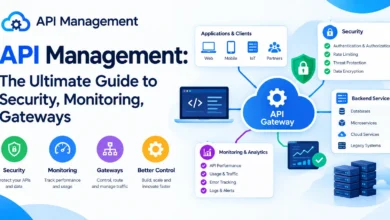
Deployment Guide: Best Practices, Strategies, and Tools for Faster Releases 2026🏆

Ultimate Deployment Guide for Faster Releases
What is the most effective deployment strategy for achieving faster and safer software releases? The ultimate answer combines automated CI/CD pipelines with canary releases and infrastructure automation. This specific approach minimizes downtime and accelerates your delivery cycle significantly.
Introduction
Deployment is the process of making a software application available for users by transferring it from a development or testing environment to a production environment. It is one of the most critical stages of the software development lifecycle because it transforms completed code into a working product that customers, employees, or end users can access. Whether deploying a simple website, a mobile application, an enterprise platform, or a cloud-native microservices architecture, an efficient Release strategy ensures reliability, security, scalability, and minimal downtime.
In modern software development, Release is no longer a manual task performed only at the end of a project. Instead, it has become a continuous and automated process powered by DevOps practices, Continuous Integration (CI), and Continuous Delivery/Continuous Release (CD). Automated Release pipelines allow organizations to release updates more frequently, detect issues earlier, and deliver new features faster while reducing human error. This approach helps businesses remain competitive in rapidly evolving digital markets.
Deployment involves much more than copying application files to a server. It includes building the application, running automated tests, packaging the software, configuring environments, provisioning infrastructure, deploying the application, monitoring its performance, and ensuring that updates can be rolled back safely if problems occur. Modern Release workflows often integrate source control systems such as Git, container technologies like Docker, orchestration platforms such as Kubernetes, cloud services, monitoring tools, and Infrastructure as Code (IaC) solutions.
Organizations use different Release strategies depending on their infrastructure, application architecture, and business requirements. Common approaches include Recreate Release, Rolling Release, Blue-Green Release, Canary Release, A/B Testing, and Shadow Release. Each method offers different advantages in terms of risk management, availability, and user experience. Choosing the right Release strategy helps minimize service interruptions while ensuring stable software releases.
Cloud computing has dramatically transformed Release practices. Major cloud providers such as Amazon Web Services (AWS), Microsoft Azure, and Google Cloud Platform provide scalable infrastructure and managed services that simplify application Release across global data centers. Developers can now deploy applications using virtual machines, containers, serverless functions, or fully managed platform services without managing physical hardware. Containerization with Docker and orchestration with Kubernetes have further improved portability, scalability, and consistency across development, testing, and production environments.
Security has also become an essential aspect of deployment. Modern Release pipelines incorporate automated security scanning, vulnerability assessments, secret management, compliance validation, and access control to protect applications throughout the release process. This evolution has given rise to DevSecOps, where security is integrated into every stage of software development and Release rather than being treated as a separate final step.
Automation plays a central role in successful Release workflows. Popular CI/CD tools such as Jenkins, GitHub Actions, GitLab CI/CD, Azure DevOps, CircleCI, and Argo CD enable teams to automate builds, tests, Release, and infrastructure provisioning. These platforms reduce manual intervention, improve consistency, accelerate release cycles, and support rapid software delivery across multiple environments.
Monitoring and observability are equally important after Release. Once an application is live, organizations continuously track performance metrics, server health, application logs, user behavior, and error rates using monitoring platforms. Real-time visibility allows teams to quickly identify problems, optimize performance, and maintain high availability while ensuring an excellent user experience.
As software systems become increasingly distributed and cloud-native, deployment continues to evolve alongside emerging technologies such as artificial intelligence, edge computing, serverless architectures, and GitOps methodologies. Businesses are adopting intelligent automation, predictive monitoring, and self-healing infrastructure to further improve Release reliability and operational efficiency.
Understanding Release is essential for software developers, DevOps engineers, cloud architects, system administrators, IT professionals, and business leaders. By mastering Release strategies, automation tools, cloud platforms, and security best practices, organizations can deliver high-quality applications faster, reduce operational risks, and create a more reliable experience for users. In today’s technology-driven world, an optimized Release process is a cornerstone of successful software development and digital transformation.
Welcome to the most comprehensive guide on modern deployment. You are about to discover everything you need to know about releasing software efficiently. We will explore the core strategies. We will review the best tools available today. You will learn how to build a robust pipeline. This guide is designed to be your final resource. You will not need to search for another tutorial after reading this. Let us dive deep into the world of continuous delivery and release management.

Understanding Modern Deployment Fundamentals
The software industry has changed dramatically over the last decade. Manual releases are now a thing of the past. A modern Release process requires speed and reliability. Teams must deliver value to users constantly. The concept of Release encompasses everything from code commit to production execution.
The Evolution of Release Management
Historically, teams treated deployment as a rare and stressful event. Developers would write code for months. Then they would hand it over to operations. This created massive bottlenecks. The modern release strategy focuses on small and frequent changes. This reduces the risk of failure.
A successful Release relies on automation. Humans make mistakes. Scripts do not. By automating the Release phase, you ensure consistency. Every environment looks exactly the same. This eliminates the classic excuse of it working on my machine.
What is a Deployment Pipeline?
A Release pipeline is a set of automated processes. It takes code from version control and pushes it to production. The pipeline includes building, testing, and releasing. Continuous delivery is the core philosophy here. Every change that passes the pipeline is ready to be released.
Important Warning: Never skip automated testing in your Release pipeline. A fast release is useless if it breaks the application. Quality gates are mandatory for a safe Release.
Core Deployment Strategies Explained
Choosing the right Release strategy is critical. The wrong choice can lead to massive downtime. The right choice ensures zero disruption. Let us analyze the most popular strategies used by top tech companies.
Rolling Updates
This is the default strategy for many container orchestrators. The system updates instances gradually. It replaces old versions with new ones one by one.
Overview
The rolling update strategy maintains availability during the deployment. The system never takes down all instances at once. Traffic is routed only to healthy instances.
Pros
- ✔️ Zero downtime during the Release process.
- ✔️ Resource efficient since you do not need double the infrastructure.
- ✔️ Simple to configure in most orchestration tools.
Cons
- ❌ The application runs two different versions simultaneously.
- ❌ Database schema changes can be very tricky to manage.
- ❌ Rollbacks are slower because you must revert instance by instance.
Tips for Success
Ensure your application is backward compatible. The old and new versions must read the same database schema. This is crucial for a smooth rolling Release.
Blue-Green Deployments
This strategy involves running two identical environments. One is live and the other is idle.
Overview
You deploy the new version to the idle environment. This is the green environment. You run all your tests on the green environment. Once you are confident, you switch the router to point to green. The old environment becomes blue.
Pros
- ✔️ Instant rollback capability. You just switch the router back.
- ✔️ No version mixing. The entire traffic hits one version.
- ✔️ Easy to perform final smoke tests before going live.
Cons
- ❌ Requires double the infrastructure resources.
- ❌ Database migrations are still complex.
- ❌ Setting up the routing switch requires careful planning.
Tips for Success
Use this deployment strategy for critical applications. The cost of double infrastructure is worth the safety it provides.
Canary Releases
This is the most advanced and safest strategy. You release the new version to a small subset of users.
Overview
You route a tiny percentage of traffic to the new deployment. You monitor the metrics closely. If everything looks good, you gradually increase the traffic. If errors spike, you halt the deployment immediately.
Pros
- ✔️ Extremely low risk. Only a few users see potential bugs.
- ✔️ Allows real-world testing with actual user traffic.
- ✔️ Performance can be measured accurately before full rollout.
Cons
- ❌ Requires sophisticated monitoring and observability tools.
- ❌ Complex to set up the traffic splitting logic.
- ❌ Not ideal for applications with strict data consistency requirements.
Tips for Success
Define your error budgets clearly. Know exactly what metric will trigger an automatic rollback. A canary deployment relies heavily on good telemetry.
Building a Robust CI/CD Pipeline
A great deployment strategy needs a great engine. The CI/CD pipeline is that engine. It automates the entire journey from code to production.
Continuous Integration Basics
Continuous integration is the practice of merging code frequently. Developers should merge code multiple times a day. Each merge triggers an automated build.
The build process compiles the code. It runs unit tests. It checks for security vulnerabilities. If any step fails, the pipeline stops. This provides immediate feedback to the developer. A broken build must be fixed immediately. This is the foundation of a healthy deployment culture.
Continuous Delivery vs Continuous Deployment
People often confuse these two terms. Continuous delivery means the code is always in a deployable state. A human must click a button to trigger the final Release.
Continuous Release takes it a step further. Every change that passes the pipeline is automatically deployed to production. There is no manual approval. This requires immense trust in your automated tests.
“Continuous deployment is the ultimate goal. It removes the bottleneck of human intervention and makes the deployment process truly continuous.”
Top Tools for Automated Deployment
The market is flooded with Release tools. Choosing the right one can make or break your workflow. We have tested dozens of platforms. Here are the absolute best tools for your Release pipeline.
Jenkins
Jenkins is a powerful open-source automation server widely used to streamline software development and DevOps workflows. It enables developers to automate building, testing, and deploying applications through continuous integration and continuous delivery (CI/CD) pipelines. With thousands of plugins and seamless integration with popular tools like Git, Docker, Kubernetes, and cloud platforms, Jenkins helps teams improve code quality, accelerate releases, and reduce manual effort. Its flexibility, scalability, and active community make it one of the most trusted automation tools for modern software development.
Jenkins is the old guard of automation. It is incredibly flexible. You can build almost any deployment pipeline with it.
- Overview: An open-source automation server. It has thousands of plugins.
- Pros: Highly customizable. Huge community support. Free to use.
- Cons: The user interface is dated. It requires significant maintenance.
GitLab CI
GitLab CI is a built-in continuous integration and continuous delivery (CI/CD) solution that automates the process of building, testing, and deploying applications directly within GitLab. Using simple YAML-based pipeline configurations, developers can create efficient workflows that integrate seamlessly with version control, issue tracking, and security scanning. GitLab CI supports Docker, Kubernetes, cloud platforms, and self-hosted runners, making it a flexible and scalable choice for teams looking to accelerate software delivery, improve code quality, and streamline DevOps operations.
GitLab offers a complete DevOps platform. The built-in CI/CD is excellent.
- Overview: Integrated directly into the GitLab repository. Uses YAML configuration.
- Pros: Seamless integration. Great visual pipeline editor. Strong container registry.
- Cons: Can be expensive for large teams. The learning curve for advanced features is steep.
GitHub Actions
GitHub Actions is a powerful CI/CD and workflow automation platform built directly into GitHub. It enables developers to automate building, testing, and deploying applications using customizable workflows defined in YAML files. With native integration for GitHub repositories, support for Docker, Kubernetes, cloud platforms, and thousands of reusable actions from the GitHub Marketplace, GitHub Actions helps teams streamline development, improve code quality, and accelerate software delivery with minimal configuration.
GitHub Actions has taken the world by storm. It is deeply integrated into the GitHub ecosystem.
- Overview: Event-driven automation. You can trigger a deployment on any repository event.
- Pros: Massive marketplace of pre-built actions. Very easy to start. Excellent YAML syntax.
- Cons: Debugging complex workflows can be frustrating. Vendor lock-in to GitHub.
ArgoCD
Argo CD is a leading GitOps continuous delivery tool designed for Kubernetes environments. It automates application Release by continuously synchronizing the desired state stored in Git repositories with live Kubernetes clusters. Supporting declarative configurations, automated rollbacks, and real-time monitoring, Argo CD helps development and operations teams deploy applications reliably, improve consistency, and simplify Kubernetes management. Its GitOps approach enhances collaboration, security, and deployment efficiency across modern cloud-native infrastructures.
ArgoCD is the king of Kubernetes deployments. It follows the GitOps philosophy.
- Overview: A declarative continuous Release tool for Kubernetes. The Git repository is the single source of truth.
- Pros: Perfect for Kubernetes. Automatic drift detection. Beautiful user interface.
- Cons: Only useful if you use Kubernetes. Requires a solid understanding of GitOps.
Tool Comparison Table
Here is a quick comparison to help you choose the right Release tool.
| Tool | User Rating | Ideal For | Ease of Use |
|---|---|---|---|
| Jenkins | ⭐⭐⭐⭐☆ | Complex custom pipelines | ⭐⭐☆☆☆ |
| GitLab CI | ⭐⭐⭐⭐⭐ | All-in-one DevOps lifecycle | ⭐⭐⭐⭐☆ |
| GitHub Actions | ⭐⭐⭐⭐⭐ | Open source and GitHub users | ⭐⭐⭐⭐⭐ |
| ArgoCD | ⭐⭐⭐⭐⭐ | Kubernetes and GitOps | ⭐⭐⭐☆☆ |
Infrastructure Automation and Configuration Management
You cannot have a modern deployment without infrastructure automation. Manual server setup is a massive risk. Infrastructure as Code solves this problem.
Terraform and Pulumi
Terraform is the industry standard for provisioning infrastructure. You write code to define your servers, databases, and networks.
Pulumi is a modern alternative. It allows you to use standard programming languages like Python and TypeScript. Both tools ensure your infrastructure is version controlled. This makes your deployment environment reproducible.
Ansible and Chef
Once the servers are provisioned, you must configure them. Ansible is an agentless configuration tool. It uses SSH to push configurations.
Chef uses an agent-based approach. It is very powerful for managing thousands of nodes. Both tools integrate perfectly into your deployment pipeline. They ensure the server is ready before the application code arrives.
Pro Tip: Never store sensitive credentials in your infrastructure code. Use a dedicated secrets manager like HashiCorp Vault or AWS Secrets Manager. A secure deployment requires secure secrets.
Best Practices for Safe and Fast Releases
Tools are only half the battle. The processes and culture dictate your success. Follow these best practices to master your deployment workflow.
Shift-Left Testing
Testing should happen as early as possible. This is the shift-left approach. Do not wait for the Release phase to find bugs.
Integrate security scanning into the build phase. Run performance tests before the code reaches the staging environment. The earlier you find an issue, the cheaper it is to fix. This keeps your deployment pipeline fast and reliable.
Feature Flags and Toggles
Feature flags are a game changer for deployment. They allow you to deploy code to production without releasing the feature to users.
You wrap the new code in a conditional statement. The flag controls whether the code executes. This decouples deployment from release. You can deploy safely and turn on the feature when marketing is ready. It also makes rollbacks trivial. You just flip the flag off.
Observability and Monitoring
You cannot improve what you cannot measure. A deployment is only successful if the application performs well.
Implement distributed tracing. Use structured logging. Set up alerts for error rates and latency. When a new Release goes live, you must know its impact within seconds. Observability is the safety net for your release strategy.
Common Deployment Pitfalls and How to Avoid Them
Even the best teams make mistakes. Learning from common pitfalls will save you hours of frustration.
The Database Migration Trap
Database changes are the hardest part of any deployment. A bad migration can corrupt data or lock tables.
Always make database changes backward compatible. Add new columns instead of renaming them. Drop old columns in a subsequent deployment. Never run massive data updates during the deployment window. Use background jobs for heavy data transformations.
Ignoring Environment Parity
Your staging environment must mirror production. If they are different, your tests are meaningless.
Use containerization to ensure parity. The exact same Docker image should run in staging and production. Only the configuration should change. This eliminates environment-related deployment failures.
Lack of Rollback Plan
Hope is not a strategy. Every deployment must have a rollback plan.
Test your rollback procedure regularly. Ensure your database migrations can be reversed. If a deployment fails, you must be able to revert to the previous state in minutes. Automate the rollback process as much as possible.
Practical Checklist for Your Next Release
Use this checklist before every major deployment. It ensures you have covered all the bases.
- [ ] All automated tests pass in the CI/CD pipeline.
- [ ] Database migrations are backward compatible and tested.
- [ ] Infrastructure as Code is applied to the target environment.
- [ ] Feature flags are configured correctly for the new release.
- [ ] Monitoring dashboards are open and ready for observation.
- [ ] The rollback plan is documented and verified.
- [ ] The team is notified and on-call schedules are confirmed.
- [ ] Security scans show no critical vulnerabilities.
Conclusion
Mastering the deployment process is the ultimate competitive advantage. It allows you to deliver value faster and safer. We have covered the core strategies like blue-green and canary releases. We have explored the best tools to automate your workflow.
Remember that a great release strategy relies on solid fundamentals. Automate everything. Test thoroughly. Monitor constantly. The tools will change, but the principles of continuous delivery remain constant.
Start small. Improve your CI/CD pipeline today. Implement feature flags tomorrow. Before you know it, your deployment process will be a well-oiled machine. You now have the knowledge to build world-class release workflows. Go forth and deploy with confidence!
FAQs
How often should we deploy to production?
Top performing teams deploy multiple times a day. The goal is to make the deployment so small and routine that it is boring. Start with weekly releases and increase the frequency as your pipeline matures.
What is the best deployment strategy for beginners?
Rolling updates are the easiest to implement. They require minimal infrastructure changes. Once you master rolling updates, you can explore canary releases for safer deployments.
How do we handle secrets in a deployment pipeline?
Never hardcode secrets. Use environment variables injected by your CI/CD tool. For advanced security, integrate a dedicated secrets manager. The pipeline should fetch the secrets at runtime.
Can we deploy without downtime?
Yes. Strategies like blue-green and canary releases allow zero-downtime deployments. Rolling updates also maintain availability. The key is proper load balancing and health checks.