5 Alternatives Google Workspace: The Most Powerful Collaborative Solutions

5 Alternatives Google Workspace: Top Collaborative Tools
Let’s be completely honest for a second: Google Workspace is everywhere. It is the default setting for millions of startups, enterprises, and educational institutions around the globe. The convenience of having Gmail, Google Drive, Docs, and Meet all talking to each other in a single, cloud-based ecosystem is undeniably attractive. But if you are reading this, you have probably hit a wall. Maybe you are frustrated by the sudden price hikes, concerned about data privacy and AI training on your documents, or simply tired of the fact that Google Sheets still chokes when you open a massive spreadsheet.
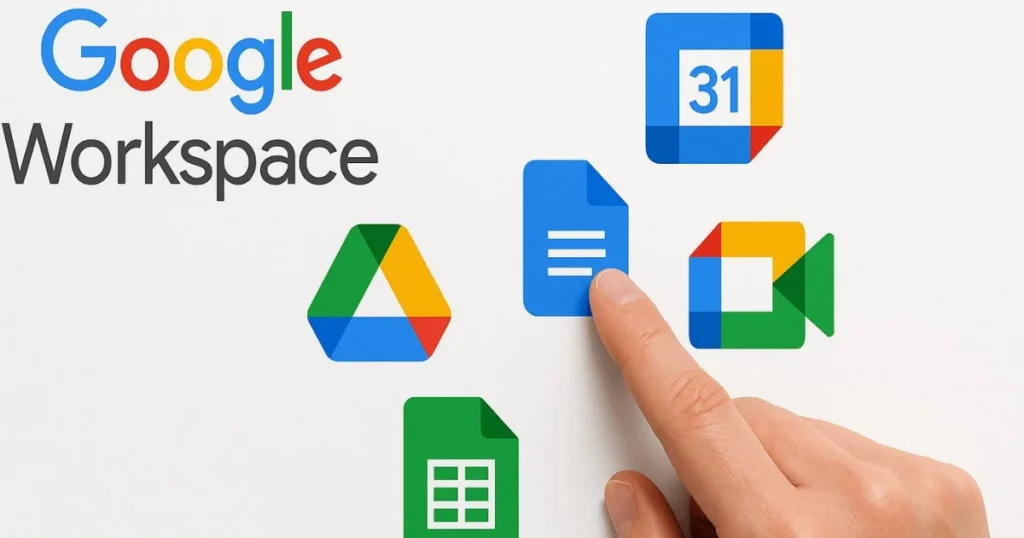
Google Workspace is a cloud-based productivity and collaboration suite that helps individuals and teams work more efficiently. It includes popular tools such as Gmail, Google Drive, Docs, Sheets, Slides, Meet, and Calendar, allowing users to create, share, and collaborate on projects in real time. With seamless integration, secure cloud storage, and access from any device, Google Workspace is a popular solution for businesses, schools, and remote teams looking to improve communication and productivity.
You are not alone. A massive wave of businesses, freelancers, and IT directors are actively searching for the best Alternatives Google Workspace. They want tools that respect their data, offer better offline capabilities, or provide a more traditional, powerful desktop experience without forcing them into a cloud-only straightjacket. Finding the right Alternatives Google Workspace is no longer just about switching software; it is about reclaiming control over your digital workflow, your budget, and your company’s data sovereignty.
In this comprehensive, no-nonsense guide, we are going to break down the 5 most powerful Alternatives Google Workspace available today. We have tested these platforms extensively, analyzing their feature sets, security protocols, pricing models, and real-world usability. Whether you need an enterprise-grade suite, a budget-friendly all-in-one, or a fortress of privacy, this guide will help you find the perfect Alternatives Google Workspace to transform your business operations. Let’s dive right in.
Why Businesses Are Actively Seeking Alternatives Google Workspace
Before we jump into the specific software, it is crucial to understand why so many professionals are pulling the plug on Google. While the ecosystem is great, it is far from perfect. Understanding these friction points will help you appreciate why these specific Alternatives Google Workspace made our list.
Data Privacy and AI Training Concerns
The biggest elephant in the room is data privacy. Google’s business model has always been rooted in data, and while Workspace promises not to scan your enterprise email for ads, the integration of generative AI features (like Duet AI) raises eyebrows. Many organizations are uncomfortable with their proprietary documents, emails, and spreadsheets being used to train AI models. If data sovereignty is your top priority, you absolutely need to look at Alternatives Google Workspace that guarantee zero-knowledge encryption or strict data isolation.
The Cloud-Only Limitation
Google Workspace is brilliant when you have a flawless, high-speed internet connection. But the moment you step onto a plane, enter a dead zone, or experience an ISP outage, your productivity grinds to a halt. While Google has improved offline modes, they are notoriously clunky and require meticulous pre-planning. Many users seeking Alternatives Google Workspace want robust, native desktop applications that work perfectly offline and sync seamlessly when the connection returns.
Pricing and Feature Bloat
Google’s pricing has crept up significantly over the last few years. Furthermore, you are often paying for a massive bundle of features you never use. If you just need a solid email client, a word processor, and some cloud storage, paying for a suite that includes advanced video conferencing and AI builders feels like a waste. The best Alternatives Google Workspace offer modular pricing, allowing you to pay only for the tools your team actually uses.
Document Compatibility and Formatting Nightmares
We have all been there: you download a complex Microsoft Word document, open it in Google Docs, and suddenly the formatting is completely destroyed. Tables are misaligned, headers are broken, and macros don’t work. For agencies, legal firms, and enterprises that deal with complex, heavily formatted documents daily, this is a massive bottleneck. This specific pain point drives thousands of users to seek out Alternatives Google Workspace that offer native, 100% perfect compatibility with the .docx, .xlsx, and .pptx formats.
Now that we know what we are running away from, let’s look at the top 5 Alternatives Google Workspace that are ready to take your productivity to the next level.
The Top 5 Alternatives Google Workspace Reviewed in Depth
1. Microsoft 365: The Enterprise Standard and Powerhouse
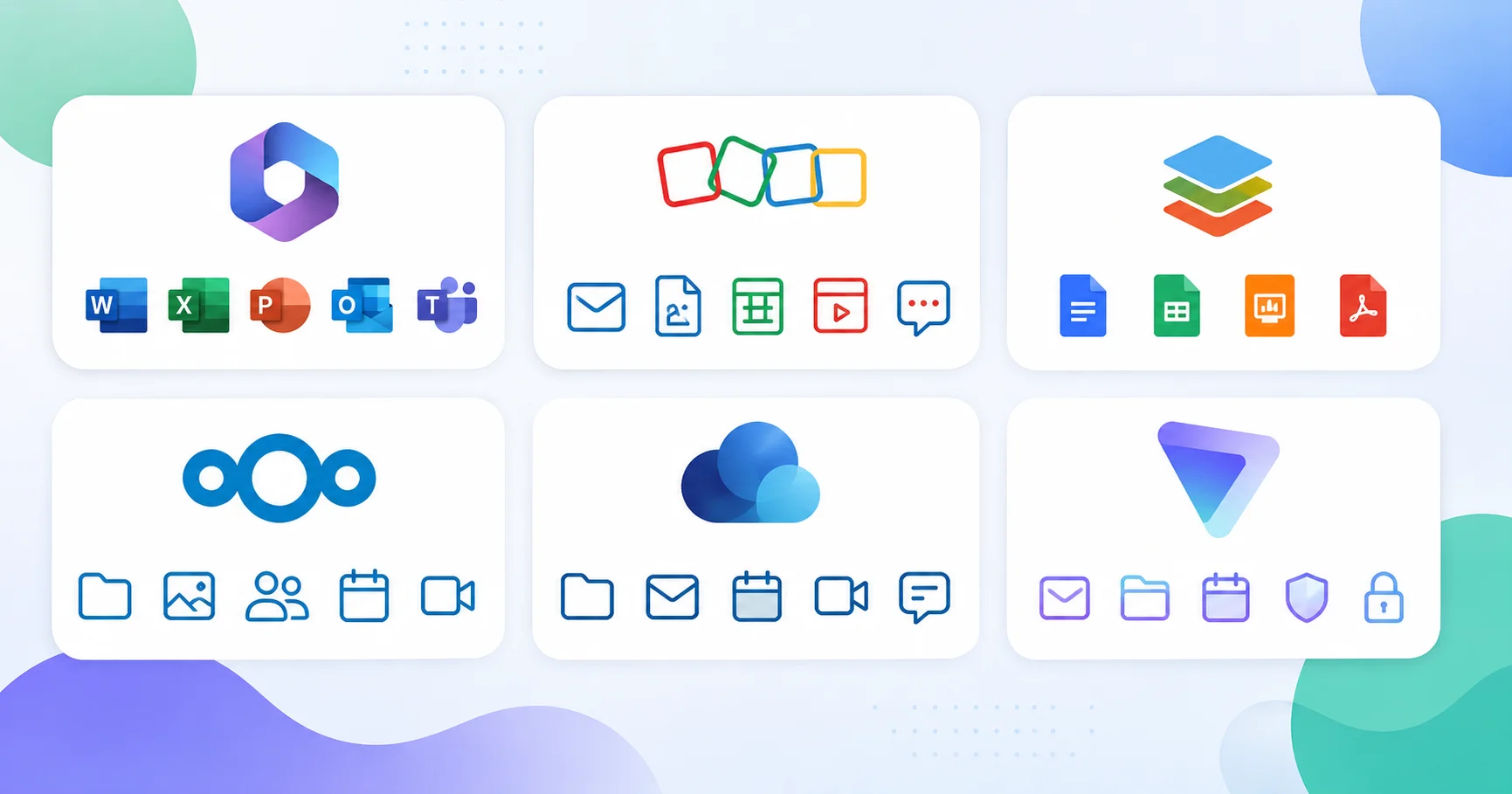
Microsoft 365 is a leading productivity and collaboration platform that combines powerful applications such as Word, Excel, PowerPoint, Outlook, Teams, and OneDrive in a single cloud-based solution. Designed for individuals, businesses, and organizations, it enables users to create documents, manage emails, collaborate in real time, and securely store files from any device. With advanced security features, regular updates, and seamless integration across Microsoft’s ecosystem, Microsoft 365 helps teams stay productive and connected wherever they work.
When discussing top-tier Alternatives Google Workspace, Microsoft 365 is the undisputed heavyweight champion. It is the default choice for Fortune 500 companies, and for good reason. If your team lives and breathes in Excel, Word, and PowerPoint, making the switch to any other Alternatives Google Workspace will feel like a downgrade in raw document power.
Why it’s a top Apps To-Do List (Wait, focus on the keyword):
Why it’s a top choice among Alternatives Google Workspace: Microsoft 365 offers the most robust desktop applications on the market. Unlike Google’s web-first approach, Microsoft gives you full-featured, native desktop apps that handle massive datasets, complex mail merges, and heavy formatting without breaking a sweat. Furthermore, Microsoft Teams has evolved into a central hub for collaboration, combining chat, video meetings, and file storage in a way that rivals Google Meet and Drive. With the recent integration of Copilot, Microsoft is also matching Google’s AI ambitions, but with the massive advantage of deep integration into your local files.
Pros
- ✔️ Unmatched desktop applications for Word, Excel, and PowerPoint.
- ✔️ Flawless compatibility with legacy document formats.
- ✔️ Enterprise-grade security, compliance, and admin controls.
- ✔️ Excellent offline functionality.
Cons
- ❌ Can be expensive, especially for small businesses needing the full suite.
- ❌ he interface can feel overwhelming and cluttered compared to Google’s minimalism.
- ❌ Teams can be resource-heavy and slow on older machines.
Pro Tip: If you are migrating from Google, use Microsoft’s official migration tools. Among Alternatives Google Workspace, Microsoft 365 offers the smoothest transition for enterprises already familiar with the Office ecosystem.
2. Zoho Workplace: The Budget-Friendly All-in-One Challenger
Zoho Workplace is a cloud-based productivity and collaboration suite that brings together essential business tools, including email, document creation, file storage, team chat, video conferencing, and project collaboration. Designed for businesses of all sizes, it offers applications such as Mail, Writer, Sheet, Show, WorkDrive, and Cliq, enabling teams to communicate and work efficiently from anywhere. With an intuitive interface, strong privacy focus, and affordable pricing, Zoho Workplace is a popular alternative to traditional office productivity platforms.
If Microsoft 365 is the expensive enterprise giant, Zoho Workplace is the agile, budget-friendly challenger. Zoho has built a massive ecosystem of over 50 applications, and their Workplace suite is a direct, highly affordable shot at Google. For small to medium-sized businesses watching their bottom line, Zoho is arguably the most attractive among all Alternatives Google Workspace.
Why it’s a top choice among Alternatives Google Workspace:
Zoho Workplace includes Zoho Mail, Writer, Sheet, Show, and a fantastic collaboration tool called Zoho WorkDrive. What makes Zoho stand out is its pricing. You get a fully ad-free, professional email experience with custom domains, robust document editors, and team collaboration tools for a fraction of the cost of Google or Microsoft. Zoho Mail, in particular, is a favorite because it offers a traditional, folder-based email interface that feels much more intuitive than Gmail’s label-based system.
Pros
- ✔️ Incredibly affordable pricing, with a permanent free plan for up to 5 users.
- ✔️ Traditional, highly intuitive email interface (Zoho Mail).
- ✔️ Deep integration with the wider Zoho CRM and business ecosystem.
- ✔️ Excellent customer support, often praised as better than Google’s.
Cons
- ❌ The document editors (Writer, Sheet) lack the advanced power of MS Office or the real-time collaboration fluidity of Google Docs.
- ❌ The user interface across different Zoho apps can feel slightly inconsistent.
- ❌ Smaller third-party integration marketplace compared to Google or Microsoft.
Pro Tip: If you run a small business, look into “Zoho One.” It gives you access to the entire suite of Zoho enterprise applications, making it the most comprehensive bundle among Alternatives Google Workspace for the price.
3. OnlyOffice: The Open-Source Document Champion
ONLYOFFICE is a versatile office productivity suite that enables users to create, edit, and collaborate on documents, spreadsheets, presentations, and PDF files. Available as both a cloud-based and self-hosted solution, it offers real-time collaboration, strong compatibility with Microsoft Office formats, and integration with popular platforms such as Nextcloud, ownCloud, and Moodle. With its focus on flexibility, security, and teamwork, ONLYOFFICE is a popular choice for businesses, educational institutions, and remote teams seeking an efficient collaboration platform.
OnlyOffice started as a powerful open-source office suite and has evolved into a complete collaborative workspace. If your primary frustration with Google is document formatting and a desire for open-source transparency, OnlyOffice is one of the most compelling Alternatives Google Workspace on the market. It is built around the idea that your office suite should use open XML formats natively, without any conversion loss.
Why it’s a top choice among Alternatives Google Workspace:
The crown jewel of OnlyOffice is its document editor. It uses .docx as its core format, meaning what you see on your screen is exactly what your client sees in Microsoft Word. There is no formatting breakage. OnlyOffice Workspace includes Document Server, Mail, CRM, Projects, and Talk. You can deploy it in the cloud via their SaaS offering, or if you are highly security-conscious, you can self-host the entire suite on your own servers. This makes it a favorite among tech-savvy teams looking for Alternatives Google Workspace that offer total control.
Pros
- ✔️ 100% native compatibility with MS Office formats (.docx, .xlsx, .pptx).
- ✔️ Available as a cloud service or a self-hosted open-source solution.
- ✔️ Highly secure with strict data privacy controls.
- ✔️ Clean, tabbed interface that feels modern and efficient.
Cons
- ❌ The mobile apps are not as polished as Google’s or Microsoft’s.
- ❌ Real-time co-editing is good, but occasionally lags behind Google Docs in speed.
- ❌ Setting up the self-hosted version requires serious IT knowledge.
Pro Tip: Use OnlyOffice if you frequently exchange complex documents with external clients who use Microsoft Office. Among Alternatives Google Workspace, it is the only one that guarantees zero formatting errors when opening heavy .docx files.
4. Nextcloud: The Ultimate Self-Hosted Privacy Hub

Nextcloud is an open-source cloud collaboration platform that allows users to securely store, sync, and share files while maintaining full control over their data. It includes features such as file management, document collaboration, video conferencing, team communication, and calendar synchronization, making it a complete productivity solution for businesses and organizations. With its strong focus on privacy, security, and self-hosting capabilities, Nextcloud is a popular alternative to traditional cloud storage and collaboration services.
Nextcloud is not just an office suite; it is a complete, self-hosted productivity platform. If your search for Alternatives Google Workspace is driven by a deep, uncompromising need for data privacy, GDPR compliance, and total ownership of your infrastructure, Nextcloud is the undisputed king. It takes the concept of cloud storage and turns it into a fully-fledged collaborative ecosystem.
Why it’s a top choice among Alternatives Google Workspace:
Nextcloud Hub combines four key elements: Files (storage), Talk (video calls and chat), Groupware (calendar and mail), and Office (document editing via integrations with Collabora or OnlyOffice). Because you host Nextcloud on your own servers (or a private cloud of your choosing), no third party—not even Nextcloud itself—can access your data. This absolute data sovereignty is why government agencies, healthcare providers, and privacy-focused NGOs actively choose Nextcloud over other Alternatives Google Workspace.
Pros
- ✔️ Absolute data sovereignty; you own 100% of your data.
- ✔️ Massive app store with hundreds of integrations to extend functionality.
- ✔️ Excellent file synchronization and sharing capabilities.
- ✔️ Highly customizable to fit your exact organizational workflow.
Cons
- ❌ Requires technical expertise to set up, maintain, and secure your own server.
- ❌ Performance heavily depends on your server hardware and internet connection.
- ❌ The integrated office suite (via Collabora/OnlyOffice) is not as seamless as native cloud editors.
Pro Tip: If you don’t want to manage your own server, look for a “Managed Nextcloud” provider. This gives you the privacy benefits of the best self-hosted Alternatives Google Workspace without the IT headache.
5. Proton: The Uncompromising Privacy and Security Suite
Proton is a privacy-focused productivity platform that offers secure email, cloud storage, calendar, VPN, and password management services. Built with end-to-end encryption, Proton helps individuals and businesses protect their data and communications from unauthorized access. With its strong commitment to privacy, user-friendly applications, and cross-platform accessibility, Proton has become a trusted choice for users seeking a secure alternative to mainstream productivity and collaboration tools.
Proton started with Proton Mail, the world’s largest encrypted email service, but it has rapidly expanded into a full suite of privacy tools. If you are looking for Alternatives Google Workspace that prioritize end-to-end encryption above all else, Proton is in a league of its own. It is built by scientists who met at CERN, and its architecture is designed to ensure that even Proton cannot read your data.
Why it’s a top choice among Alternatives Google Workspace:
Proton now offers Proton Mail, Proton Drive (encrypted cloud storage), Proton Calendar, Proton Pass (password manager), and SimpleLogin (email aliasing). While it doesn’t have a native word processor or spreadsheet app like Google Docs, it replaces the core communication and storage pillars of Google Workspace with military-grade security. Every email, every file, and every calendar event is end-to-end encrypted. For lawyers, journalists, healthcare professionals, and anyone handling highly sensitive IP, Proton is the most secure among all Alternatives Google Workspace.
Pros
- ✔️ Unmatched end-to-end encryption and zero-access architecture.
- ✔️ Based in Switzerland, protected by the world’s strictest privacy laws.
- ✔️ Open-source and independently audited for security.
- ✔️ Beautiful, intuitive, and user-friendly interface despite the heavy cryptography.
Cons
- ❌ Lacks native document creation tools (no Docs, Sheets, or Slides).
- ❌ Search functionality is limited because the server cannot read your encrypted data.
- ❌ Collaboration features are basic compared to Google or Microsoft.
Pro Tip: Use Proton’s “SimpleLogin” feature to create hidden email aliases for signing up to services. Among Alternatives Google Workspace, Proton offers the best tools for protecting your personal and corporate identity from spam and tracking.
Comparative Table: Alternatives Google Workspace at a Glance
To help you quickly evaluate these Alternatives Google Workspace, we have compiled a comprehensive comparison table. This includes user ratings based on aggregated community reviews, pricing models, and standout features.
| Tool | Best For | Pricing Model | Standout Feature | User Rating |
|---|---|---|---|---|
| Microsoft 365 | Enterprises & heavy document users | Premium ($6-$22/user/mo) | Native Desktop Apps & Copilot AI | ⭐⭐⭐⭐⭐ (4.7/5) |
| Zoho Workplace | SMBs & budget-conscious teams | Budget ($3-$6/user/mo) | Ad-free Custom Email & CRM Integration | ⭐⭐⭐⭐½ (4.5/5) |
| OnlyOffice | Formatting purists & open-source fans | Free (Self-hosted) / Paid Cloud | 100% Native .docx/.xlsx Compatibility | ⭐⭐⭐⭐ (4.3/5) |
| Nextcloud | Privacy advocates & IT admins | Free (Self-hosted) / Paid Managed | Total Data Sovereignty & Self-Hosting | ⭐⭐⭐⭐⭐ (4.8/5) |
| Proton | Security-first professionals & NGOs | Freemium ($5-$10/user/mo) | End-to-End Encrypted Mail & Drive | ⭐⭐⭐⭐⭐ (4.9/5) |
Note: User ratings are dynamic and based on aggregated feedback from platforms like G2, Trustpilot, and Gartner, factoring in ease of use, security, and value for money among the various Alternatives Google Workspace.
Practical Summary and Checklist for Choosing the Right Tool
With 5 powerful Alternatives Google Workspace on the table, decision paralysis is a real threat. How do you actually make the final decision without wasting weeks testing every single feature? Use this practical checklist to narrow down your choice based on your specific operational needs:
- [ ] Do you need heavy-duty desktop applications and flawless MS Office compatibility?
Choose Microsoft 365. It remains the undisputed king of document processing among Alternatives Google Workspace. - [ ] Are you a small business on a tight budget that needs custom email and basic collaboration?
Choose Zoho Workplace. It offers the best value for money and a fantastic traditional email interface. - [ ] Do you want an open-source solution that you can host on your own servers?
Choose OnlyOffice or Nextcloud. Both offer incredible transparency and control for tech-savvy teams. - [ ] Is absolute data privacy, GDPR compliance, and zero-knowledge encryption your #1 priority?
Choose Proton. If security is non-negotiable, Proton is the most secure among all Alternatives Google Workspace. - [ ] Do you need a central hub for file sharing, video calls, and project management?
Choose Nextcloud. Its Hub ecosystem covers almost every base for internal team collaboration. - [ ] Do you want to stay within a familiar ecosystem but need better offline capabilities?
Choose Microsoft 365. Its native desktop apps work perfectly without an internet connection.
By running your requirements through this checklist, you can quickly identify which of these Alternatives Google Workspace aligns perfectly with your workflow, budget, and security requirements.
How to Migrate to New Alternatives Google Workspace
Switching your entire digital workspace can feel like performing open-heart surgery on your business. You worry about losing emails, breaking calendar invites, and confusing your team. Fortunately, migrating to one of these Alternatives Google Workspace is much smoother than it used to be. Here is a quick, three-step guide to ensure a seamless transition.
Step 1: Audit and Clean Up Your Google Data
Before you move anything, do some digital spring cleaning. Google Workspace accumulates years of junk: massive email attachments, duplicate Drive files, and obsolete calendar events. Use tools like Google’s Data Export or third-party cleanup scripts to archive old data and delete the noise. A clean source environment makes migrating to your new Alternatives Google Workspace significantly faster and cheaper.
Step 2: Use Native Migration Tools and IMAP Sync
Almost all the top Alternatives Google Workspace have built-in migration wizards. Microsoft 365, Zoho, and Nextcloud all allow you to connect directly to your Google accounts via IMAP and API tokens. You can set up the migration to run over a weekend, pulling your emails, contacts, and calendar events in the background. For Google Drive files, tools like MultCloud or the native migration assistants will map your folders directly to the new cloud storage.
Step 3: Update MX Records and Train Your Team
Once the data is synced, it is time to cut the cord. You will need to update your domain’s MX records to point to your new email provider (e.g., from Google’s servers to Microsoft or Zoho). Do this on a Friday evening to minimize disruption. More importantly, spend time training your team. The UI of your new Alternatives Google Workspace will be different. Host a quick workshop to show them where to find their files, how to schedule meetings, and how to use the new collaboration features.
Conclusion: Which Alternatives Google Workspace Will You Choose?
The era of blindly accepting Google Workspace as the only option for cloud productivity is over. While Google built an incredibly convenient ecosystem, the rapid innovation surrounding its Alternatives Google Workspace has created a fiercely competitive market. Today, you do not have to compromise on privacy, document compatibility, or budget just to keep your team connected.
If you need raw, uncompromising document power and deep enterprise integration, Microsoft 365 remains the undisputed champion. For small businesses that want a highly affordable, ad-free email and collaboration suite, Zoho Workplace is a breath of fresh air. If formatting perfection and open-source transparency are your goals, OnlyOffice will not disappoint. For those who demand absolute data sovereignty and self-hosting capabilities, Nextcloud is the ultimate fortress. And if end-to-end encryption and uncompromising privacy are non-negotiable, Proton stands alone at the top of the mountain.
The best approach is not to overthink the decision. Pick the Alternatives Google Workspace that best aligns with your checklist, sign up for a trial, and run a pilot project with a small segment of your team. Test how it feels to draft a complex document, share a file, or schedule a meeting in the new environment. See how it feels to finally take back control of your data and your budget.
Stop letting an outdated or overpriced ecosystem bottleneck your team’s potential. Explore these powerful Alternatives Google Workspace today, take full control of your digital workspace, and watch your team’s productivity, security, and satisfaction soar to new heights. Your future, highly-optimized business will thank you.
FAQs about Alternatives Google Workspace
To further assist you in navigating the world of cloud productivity, we have answered the most common questions asked by IT directors and business owners looking for Alternatives Google Workspace.
1. What is the best free alternative to Google Workspace?
If you need a completely free suite for a small team, Zoho Workplace offers a permanent free plan for up to 5 users, including 5GB of storage per user and ad-free custom email. If you have IT expertise and want a free, enterprise-grade collaboration hub, Nextcloud and OnlyOffice are completely free to download and self-host, making them the best free Alternatives Google Workspace for technical teams.
2. Can these alternatives to Google Workspace integrate with my existing CRM or third-party apps?
Yes, integration is a standard feature in modern productivity suites. Microsoft 365 and Zoho Workplace have massive app marketplaces with thousands of native integrations (Salesforce, Slack, Trello, etc.). Nextcloud also boasts a huge app store. If a native integration doesn’t exist, all of these Alternatives Google Workspace support Zapier or Make, allowing you to connect them to virtually any software on the planet.
3. Are these alternatives to Google Workspace truly more private and secure?
It depends on which tool you choose. If you choose Proton or a self-hosted Nextcloud instance, yes, they are exponentially more private than Google. They use end-to-end encryption or zero-knowledge architecture, meaning even the company hosting the software cannot read your data. Alternatives Google Workspace like Microsoft 365 offer excellent enterprise security and compliance, but they still hold the encryption keys on their servers, unlike Proton.
4. Will my team struggle to adapt to these new alternatives to Google Workspace?
There is always a learning curve when switching ecosystems. Moving from Google Docs to Microsoft Word or Zoho Writer will require a few days of adjustment. However, the core concepts of cloud collaboration—sharing links, leaving comments, real-time editing—are universal. Most Alternatives Google Workspace offer excellent onboarding resources, and because the underlying workflow is similar, teams usually adapt within a week.
5. Which alternative to Google Workspace is best for remote and hybrid teams?
For remote teams that rely heavily on video communication and chat, Microsoft 365 (with Teams) and Nextcloud (with Nextcloud Talk) are exceptional choices. They provide a centralized “virtual office” experience. If your remote team is more asynchronous and focused on document collaboration, Zoho Workplace and OnlyOffice provide excellent, low-latency co-editing experiences, making them highly effective Alternatives Google Workspace for distributed teams.